Introduction:
Squatting is a fundamental compound exercise that engages multiple muscle groups and offers numerous benefits, from building lower body strength to improving functional fitness. However, proper form is crucial to prevent injury and maximize results. This step-by-step guide will help you learn how to squat with correct form and technique.
Step 1: Warm-Up
Before you start squatting, warm up your body with 5-10 minutes of light cardio (e.g., jogging in place or jumping jacks) and perform dynamic stretches to loosen your muscles.
Step 2: Stand Tall
Stand with your feet shoulder-width apart, toes pointing slightly outward. Keep your chest up, shoulders back, and maintain a neutral spine (neither arched nor rounded).
Step 3: Engage Your Core
Tighten your core muscles by drawing your navel toward your spine. This will provide stability to your lower back during the squat.
Step 4: Begin the Descent
Initiate the squat by pushing your hips back as if you’re about to sit down in a chair. Maintain a slight forward lean in your torso while keeping your chest up.
Step 5: Hip and Knee Flexion
Bend your hips and knees simultaneously. Ensure that your knees track in line with your toes; they shouldn’t collapse inward or push too far forward.
Step 6: Lower Body Position
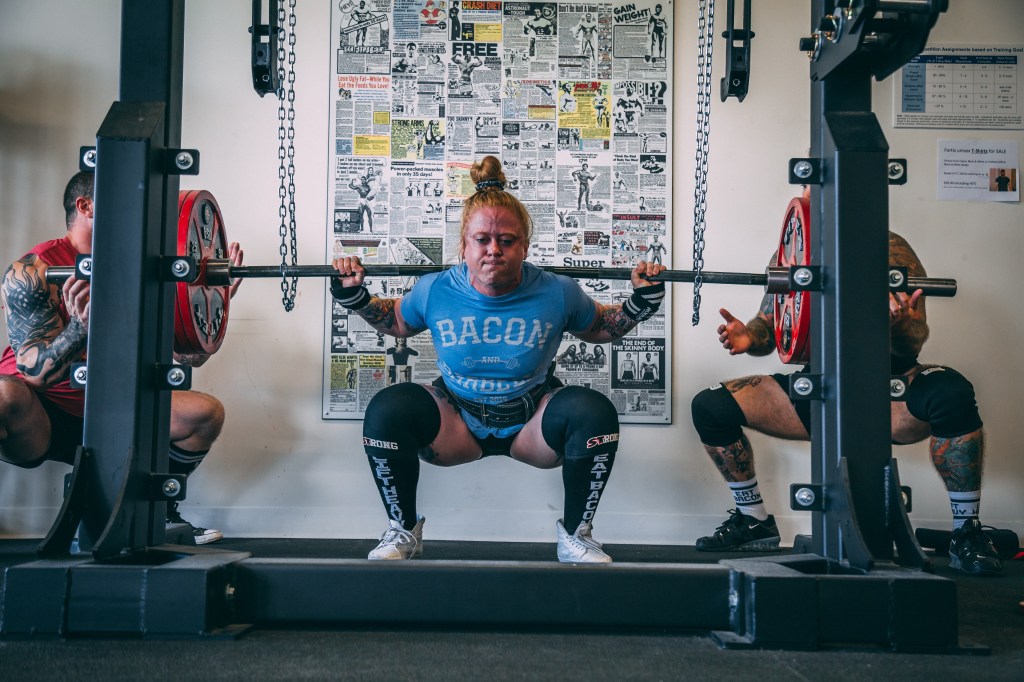
Continue descending until your thighs are parallel to the ground or go slightly deeper if you have the flexibility. Your knees should be in line with your toes, and your weight should be distributed evenly across your feet.
Step 7: Maintain Proper Alignment
Check your form at the bottom of the squat. Your back should be straight, and your knees should not extend beyond your toes. If your form is compromised, work on your flexibility and consider reducing the depth of your squat.
Step 8: The Ascent
To stand back up, push through your heels, engage your glutes, and extend your hips and knees simultaneously. Keep your chest up as you rise.
Step 9: Breathing
Inhale as you descend into the squat, and exhale as you ascend. Proper breathing helps stabilize your core and maintain proper form.
Step 10: Repeat
Perform the desired number of repetitions for your workout. Start with 2-3 sets of 8-10 reps if you’re a beginner and gradually increase as you become more comfortable with the exercise.
Tips:
- Use a mirror or have a spotter check your form to ensure correctness.
- Start with bodyweight squats and progress to using weights (dumbbells, barbells) as you gain strength and confidence.
- If you experience discomfort or pain, stop immediately and consult a fitness professional to address any issues with your form or flexibility.
Conclusion:
Learning how to squat with proper form is essential for maximizing the benefits of this exercise while minimizing the risk of injury. Incorporate squats into your fitness routine to build lower body strength, improve mobility, and enhance overall functional fitness. As you become more experienced, consider variations like goblet squats, front squats, or sumo squats to target different muscle groups.
 Health N’ More
Leave a comment